Harsh Lessons: What your officials aren’t telling you
Pizza Party
A bleak and badly lit association hall, plastic everything, cold buffet food, a potentially fixed award ceremony and an insulting series of lectures to a captive room of officials disguised as a celebratory gathering. HBO’s ‘How-To…’ with John Wilson’s ‘How-to split the check’ hit too near the bone. [1]
Over many years officiating in multiple sports, in different states and working with hundreds of associations and assigners, it was depressingly easy to trace back all of the elements on display in the show to similar experiences: the unintentional disrespect to people mostly volunteering their time to uplift a game they are passionate about, the lack of consideration in planning, the soap-box dressing down to large groups and the tone deaf approach of the association leadership was too familiar and cringeworthy to laugh.
While the leaders running official’s associations likely have great intentions, may have put decades into building out the association and surely, at some point, had a desire to do something supportive, impactful, and engaging with it. The harsh reality is; times change, the expectations of officials continually expand and the old school approach may be hampering retention rates, enjoyment of officials working games, and the overall quality of the officiating within the association. Especially if leaders are not growing their management skills at pace with modern expectations. So much so it’s become comedy material.
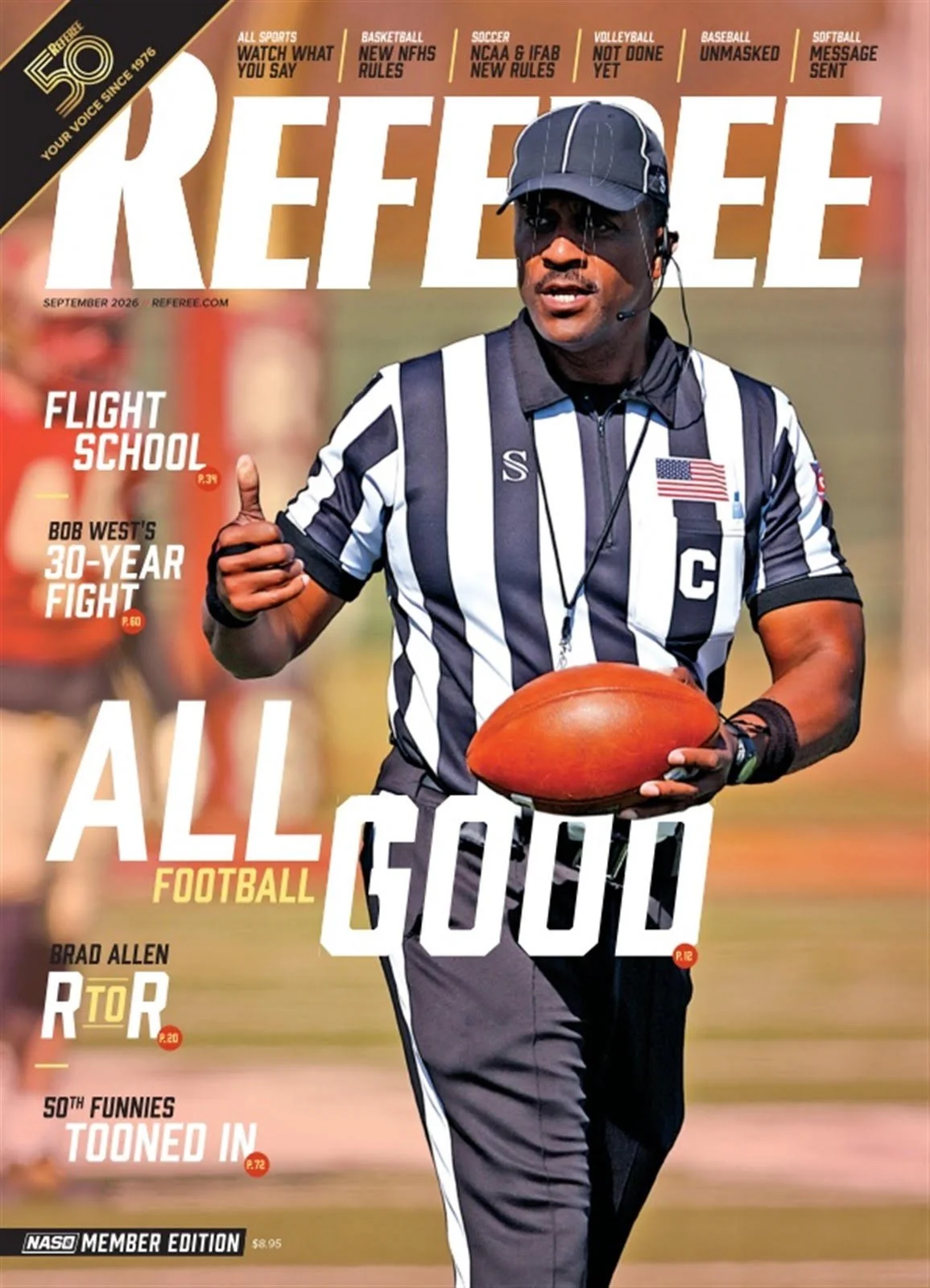
Harsh Lessons
Article originally published in Referee Magazine by National Association of Sports Officials (NASO) September 2026.
Listen up, everyone
Association leaders- who do you think is usually in the room in your ref meetings, or on the end of an email blast?
National surveys of officials would indicate that just under 40% of your officials are in middle and upper management, followed closely by skilled trades and retirees.[2] If you spread the likelihood of the same stats being reflected in the professional backgrounds of the retired percentage and that of the self-employed; your association is disproportionately made up of professional managers and leaders.
When these individuals see associations deliver shoddy meetings, when they open up their phone and read an email to 500+ officials complaining about the actions of one or two, when they are trying to recharge during long tournament days and are subjected to complaints or administrative threats disguised as instructions: they are absolutely hearing you, but they aren’t interpreting just the info, they’re contemplating their breaking point or considering their options. Many times, there won’t be any feedback, officials will simply vote with their feet and gravitate towards other orgs or assigners that exhibit more of what they want; respectful communication and effort. Or they quit because the external pressures of criticism, time demands and lack of respect are compounded by the organizations themselves.
And another thing
If you find yourself with a high turnover, are continually ‘correcting’ large groups of officials, sending out reactionary emails about small issues, failing to properly prepare and deliver information at gatherings and it feels like ‘nobody ever listens’- here’s what the officials in your association probably aren’t telling you:
Your communication is deflating and counterproductive
Officials are looking for communication that gives them the info up front, isn’t speculating about event or game info or rules and most definitely, if you want to keep the room, avoid pre-loading complaints about timekeeping, rule application or dress codes etc. before there has even been an issue. Consider using templates for emails, tournament info and calls for filling slots. In a time where AI is already integrated into the major mail platforms, there is no excuse for badly formatted mail outs that have to be read several times to comprehend them.
One of the most ubiquitous misconceptions is that the most experienced official or most senior association leader is the best person to communicate to your officials. FInd a person in the association with the best presentation and public speaking skills, who understands communication platforms and can read the room during presentations to keep them moving along. Someone who can tailor communication styles to different levels of officials and age groups will make your communications hit how you want them to without seeming overbearing.
You need to handle corrective issues at the right scale
There is nothing more aggravating than being scolded, as part of a group, for individual grievances between leaders and officials who messed up. Connect with the individuals separately and privately. If the larger group needs to hear about updates arising from it, word and deliver it in a way that provides context and ask for collaboration in righting the wrong.
Your attention to detail is making it harder to enjoy and keep coming back
Retention and enjoyment go beyond abuse policy enhancements and pay. Even though that remains important. [3]
People want to feel proud of what they invest their valuable time in. That starts with ensuring your officials receive the same basic treatment across the board. Small things like some officials having branded gear, badges, coins, or whistles provided and others not, especially new officials, can have a significant impact on them feeling a part of the organization. If one official has it, all should have it. Build it into the onboarding of your new officials, it’s a small action with a big impact.
While advocating for higher pay rates on behalf of your officials will always be appreciated, it’s not always possible year on year. Taking steps that are within your control can supplement this greatly and give high visibility into your association’s efforts to support officials. Reinvesting some of the pot into enhancing your websites, working with facility owners to kit-out official’s dressing rooms, facilitate equipment swaps and equipment banks, provide adequate tenting for tournaments- the list goes on. Not everything costs money, but the efforts will be noticed and appreciated.
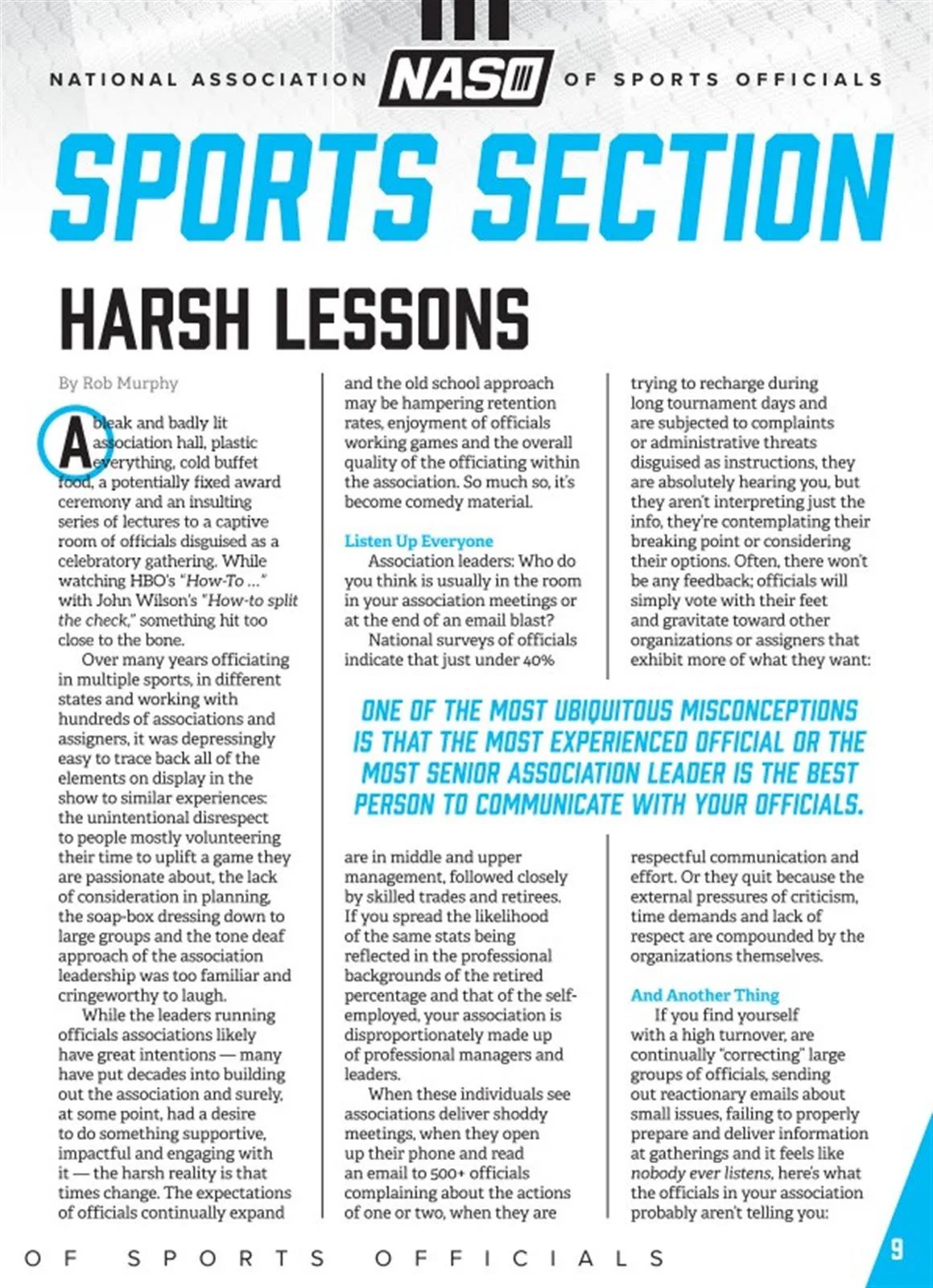
Heavy Whistle featured in NASO’s Referee Magazine, September 2026.
Pivot to service leadership
The quality of sports officials associations can have a profound influence on the performance and longevity of its members. Associations that prioritize respectful communication, advocacy and community tend to foster stronger officiating outcomes- while those that lead with pressure and indifference may inadvertently contribute to frustration and attrition.
To sustain healthy and modern associations, leaders must develop with the demands of their membership. This starts with understanding that your leadership is being judged and weighed even when you are not receiving feedback.
Ultimately, the association leaders who embrace strategic communication, understand that all actions will be seen as intentional and champion a leadership model where the official’s experience is enhanced and not diminished will be the ones that thrive. Both sports, and officials, need that.
Rob Murphy
John Wilson, How-To with John Wilson, HBO, ‘How-To split the check’, Season 1. Episode 5, 2020.
NASO, National Survey of Officials, Careers & Life Outside Officiating, 2023
Matthew J Williams D.S.M., M.B.A. M.S. The Real Cause of Losing Sports Officials, The Sport Journal, 2022
